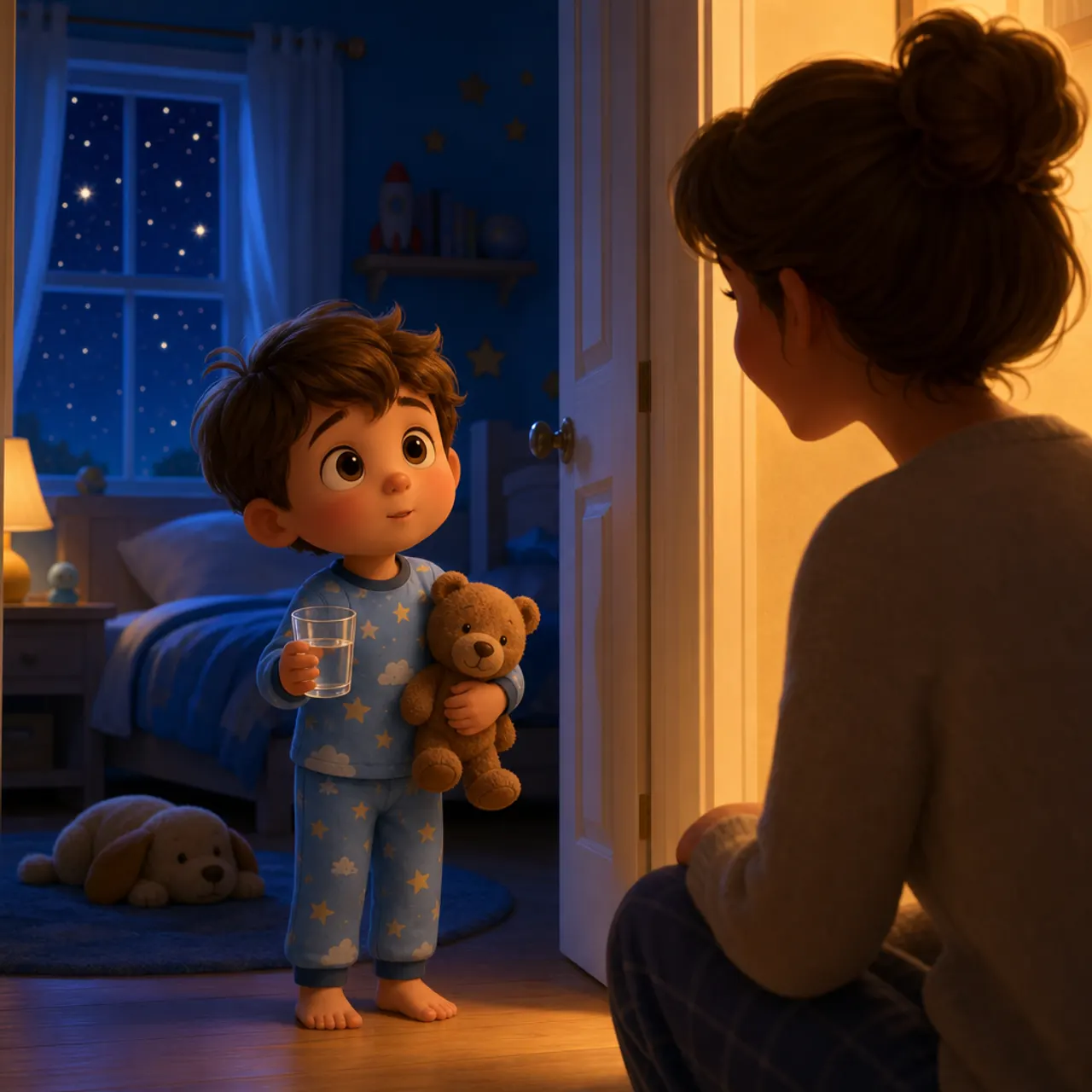
You've done everything right.
Bath: done. Teeth: brushed, mostly. Pajamas: on the correct body. You've read the book, done the hug, done the second hug. You are four feet from the doorway. Freedom is right there.
And then, from behind you, in a voice of enormous seriousness:
“Mommy? What happens when you die?”
Kids are unbelievable at this. Not just at stalling — at picking the exact moment and the exact topic that makes it impossible to walk away. They will ask about mortality. They will remember, urgently, something that happened at preschool eleven days ago. They will request water with a specificity bordering on sommelier.
It's almost never about the water.
Here's the reframe that changed bedtime at my house: stalling usually isn't defiance. It's a bid for connection at the exact moment connection is being withdrawn.
Think about the day from their side. School or daycare. A sitter. You on your laptop. Dinner chaos, then bath, then the routine — which most of us execute at speed while mentally reviewing tomorrow's calendar.
Then you turn off the light and leave.
For a lot of kids, the last ten minutes before bed are the first quiet, undistracted access to you they've had all day. Of course they're going to try to extend it. They're not being manipulative. They're being efficient.
Once you see it that way, the goal changes. You're not shutting down a behavior. You're moving a real need somewhere it fits better.
Three scripts.
When it's connection — the deep question, the “tell me about when I was a baby”:
“That's a really good question, and I want to give you a real answer, not a sleepy one. Let's talk about it at breakfast. I'll remember. Ask me.”
Then actually remember. That's the whole thing. Follow through twice and they learn “tomorrow” is real and not a brush-off, and the big questions start migrating to daylight where they belong.
When it's fear — dark, monsters, being alone. Often disguised as a body complaint: tummy hurts, leg hurts, too hot. Kids frequently can't name anxiety, so it comes out physical.
“I'm going to come check on you in ten minutes. You don't have to stay awake for it — I'll come either way.”
The magic is that it's unconditional. They don't have to hold themselves awake to earn it. Then you go, and they hear the door, and over a few nights the worry drains out.
When it's control — they've been told what to do all day and bedtime is the last available place to push back. Very common at 2–4 and again around 6.
Front-load the choices so they spend their control budget before lights-out. Which pajamas, which book, which stuffed animal, which song. By the time you're at the door they've made four decisions and the tank is empty. Then: “Lights out now. See you in the morning.” Short, warm, not a debate opening.
One thing worth checking before you deploy any of these: is your kid actually tired? If they consistently aren't at bedtime for two weeks straight, bedtime is in the wrong place. Move it fifteen minutes later. Changing the schedule is not a moral failure.
Build the stall into the routine.
This is the best trick I know and it feels like cheating.
Give the stall an official slot. Call it whatever — “two questions,” “the last chat,” “wondering time.” Two minutes after the story, before lights out. They can ask anything or tell you anything, you listen properly, then it's over.
What this does is remove the incentive to stall. The connection they were fishing for is already scheduled and guaranteed, so they don't have to invent a reason to keep you in the room. You already promised to be there.
The bonus: you find out things. Kids tell you the real stuff in that two minutes — who was mean at recess, what they're scared of, what they're quietly proud of. It becomes the best part of the night, which is annoying, because now you don't want to leave.
Make the ending unmistakable.
Whatever else you do, the routine needs a hard stop that's identical every time. Same words, same tone.
“Goodnight, I love you, see you in the morning.”
Say it and go. Don't answer the next question through the door. Not because you're being cold — because ambiguity is what keeps them fishing. If they're genuinely unsure whether bedtime is over, they'll keep testing, and honestly that's the rational move on their part.
A clean ending is a kindness. It tells them the day is done, they're safe, nothing more is required of them. That's the whole message of bedtime, really.
And some nights you'll do all of this correctly and still end up on the floor outside their door at 9:15. Nothing went wrong. Kids aren't systems. Tomorrow you get to run it again.